Resin vs Block Paving Driveways: Which Is Better for Your Home?
Resin bound and block paving are both strong driveway choices, but the right one depends on your budget, property style and local soil conditions. This guide breaks down realistic 2026 costs, a full comparison, and what Bromley and Orpington homeowners specifically need to know.
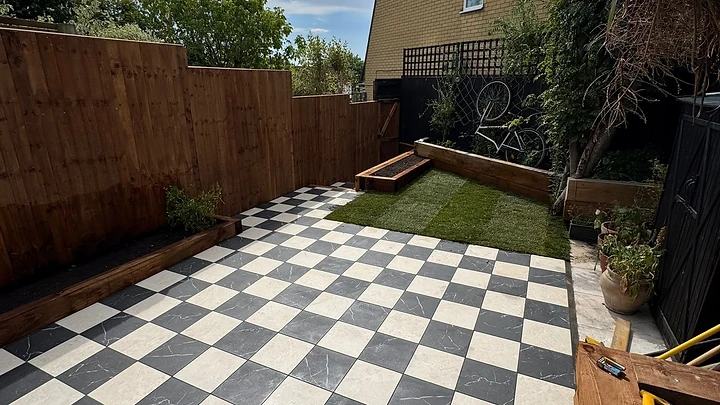
Resin vs Block Paving Driveways: Which Is Better for Your Home?
Choosing between resin and block paving is one of the most common questions we get asked at Rubin Constructions. Both are excellent driveway surfaces, both are widely used across Bromley, Orpington and South East London — and both have their strengths. The honest answer is that neither is universally better. The right choice depends on your budget, your property, your soil conditions and how much maintenance you're prepared to do.
This guide breaks down the key differences, realistic costs, and local considerations to help you make a confident decision.
What Is Resin Bound Paving?
Resin bound surfacing involves mixing natural aggregate — typically quartz, marble or recycled glass — with a clear polyurethane resin, then trowelling it onto a prepared base. The result is a smooth, porous surface that looks clean and contemporary.
It's worth noting the difference between resin bound (aggregate mixed throughout, porous, SUDS-compliant) and resin bonded (aggregate scattered on top of a resin coat, not porous). For driveways, resin bound is nearly always the better option and the one most reputable contractors install.
What Is Block Paving?
Block paving uses individual concrete or clay blocks laid onto a compacted sub-base and sharp sand bed, then jointed with kiln-dried sand. It's a traditional, proven surface that's been used on UK driveways for decades. It comes in a wide range of colours, patterns and finishes — from simple running bond to herringbone and basket weave.
Cost Comparison: Realistic 2026 UK Prices
Prices in London and the South East sit above the national average due to labour rates and material transport costs. Here's what you should realistically expect:
Resin Bound Driveways
- Supply and install: £80–£120 per m² for a standard 6mm aggregate on a new tarmac or concrete base
- With full sub-base excavation and installation: £100–£140 per m²
- Typical 40m² driveway (e.g. semi-detached in Orpington): £4,000–£5,600
- Larger 60m² driveway (detached property in Bromley): £6,000–£8,400
Costs rise if the existing base needs significant repair, if drainage channels are required, or if you opt for premium aggregates.
Block Paving Driveways
- Supply and install: £70–£110 per m² for standard concrete block paving
- Clay or tumbled block: £90–£130 per m²
- Typical 40m² driveway: £2,800–£4,400
- Larger 60m² driveway: £4,200–£6,600
Key Cost Factors for Both Surfaces
- Excavation depth and volume — London clay (more on this below) often requires deeper sub-bases
- Existing surface removal and disposal — skip hire, disposal fees
- Drainage requirements — soakaways, channel drains, connection to existing drainage
- Access constraints — tight entrances, rear gardens, restricted vehicle access
- Edging and border details — rumble strips, kerbs, step drops to the pavement
- Size and shape complexity — curves and tight corners add time to both installs
Comparison Table
| Feature | Resin Bound | Block Paving |
|---|---|---|
| Typical cost (per m²) | £80–£140 | £70–£130 |
| Appearance | Smooth, contemporary | Traditional, varied patterns |
| Permeability | Fully porous (SUDS-compliant) | Permeable if jointed correctly |
| Durability | 15–25 years with good base | 20–30+ years |
| Maintenance | Low — occasional jet wash | Moderate — re-sanding, weeding |
| Repairs | Patches can be visible | Individual blocks replaceable |
| Weed resistance | Excellent | Moderate — joints can harbour weeds |
| UV/colour stability | Can fade slightly over time | Stable — fading is minimal |
| Winter performance | Good — porous aids drainage | Good — slight freeze-thaw risk at joints |
| Planning (SUDS) | Compliant as standard | Compliant if properly jointed |
| Re-sale appeal | High — modern aesthetic | High — classic, widely trusted |
Local Considerations: London Clay, Bromley and Orpington
London Clay Soil
This is genuinely important and often underestimated. Much of Bromley, Orpington, Chislehurst and the surrounding areas sit on London clay, which is expansive — it shrinks in dry summers and swells significantly in wet winters. A driveway base that isn't properly engineered for clay movement will crack, sink or heave regardless of whether the surface is resin or block.
For clay sites, we typically excavate to 250–300mm and install a compacted MOT Type 1 sub-base before any surface layer. Some sites require geotextile membrane below the sub-base. If you receive a quote that doesn't mention sub-base depth or soil type, ask directly — it matters more than the surface material you choose.
Bromley and Orpington Housing Stock
The majority of homes in this area are 1930s–1960s semi-detached and detached properties. These typically have front gardens of 30–60m² that were originally laid to lawn or gravel. Converting them to hard standing is extremely common and both resin and block paving work well on these plots.
The aesthetic match is worth considering. Block paving — particularly tumbled concrete or clay block in buff, charcoal or brindle — tends to complement traditional red-brick and pebbledash Thirties homes. Resin bound in natural aggregate tones (flint, honey, or mixed earth tones) can look equally sympathetic and gives a more contemporary finish that many homeowners now prefer.
Planning Permission
Under Permitted Development rules, you do not need planning permission for a new driveway if it uses a permeable surface, or if surface water is directed to a lawn or border rather than the public highway. Both resin bound paving (inherently porous) and block paving installed with permeable jointing sand meet this requirement. If you're installing an impermeable surface — standard tarmac or concrete without drainage provision — you would need to apply for permission.
If your property is in a Conservation Area (parts of Chislehurst and some Bromley Village streets fall within designated areas), additional restrictions may apply regardless of surface type. We'd always recommend checking with Bromley Council's planning department before work begins if you're uncertain.
For more detail on what we install across the borough, see our driveways service or check areas we cover.
Which Should You Choose?
Choose resin bound if:
- You want a low-maintenance, weed-resistant surface
- A modern, clean aesthetic suits your property
- You'd rather not re-sand or re-edge in five years
- The driveway has curves or awkward shapes that block paving would make complex
Choose block paving if:
- You prefer a traditional look that matches your home's character
- You want the ability to lift and relay individual blocks for utility access
- You're working to a tighter budget
- Long-term durability over decades is the priority
Both surfaces, installed correctly on a proper sub-base, will serve a typical South East London home well for 15–25 years or more. The quality of the preparation and installation matters far more than the surface choice itself.
Frequently Asked Questions
Does resin paving crack over time?
Resin bound paving is flexible by nature, which makes it more resistant to cracking than rigid surfaces like concrete. However, if the base beneath it moves — particularly on London clay — cracks can appear. This is why proper sub-base construction is essential. A well-installed resin driveway on a stable base should not crack for 15 years or more.
Can block paving be installed to meet SUDS regulations without planning permission?
Yes. Block paving installed with permeable jointing and on a sub-base that allows water infiltration meets Sustainable Urban Drainage (SUDS) requirements and does not require planning permission under Permitted Development rights. We ensure all our block paving driveways are installed to comply with current regulations as standard.
How long does a driveway installation take?
For a typical 40–50m² residential driveway, block paving installation takes 3–5 days. Resin bound installation is generally quicker once the base is prepared — the resin layer itself is usually completed in a day, with a 24-hour curing period before use. Full projects including excavation and sub-base work typically run 3–4 days for resin and 4–6 days for block paving.
Is resin paving slippery when wet?
A properly installed resin bound surface using correctly graded aggregate is not slippery when wet — it typically achieves a good slip resistance rating. The porous nature of the surface actually helps, as water drains through rather than pooling. Smoother or finer aggregates can be more slippery, which is why aggregate selection matters. We always advise on appropriate aggregate grades for driveways and pathways.
If you're still weighing up options or want a professional assessment of your specific plot, soil conditions and what would work best, get a free quote and we'll visit the site, take measurements and give you honest advice — no pressure, no obligation.
Orpington Services
Planning a project in BR5 or BR6? See our dedicated Orpington service pages: